Democratic Party secures majority in the Senate, House of Representatives, and Governor... Warning of data center investment due to regime change in Texas Expectation of tariff relief for automobiles, interest rate variables for bio... Distinguish between policy benefits and performance improvement
As the 'blue tsunami', in which the Democratic Party secures a majority of the Senate, House of Representatives, and governors in the U.S. midterm elections, becomes a reality, the investment landscape by industry in the global stock market is changing. Policy uncertainty has been highlighted in the semiconductor sector, which has been growing thanks to increased investment in artificial intelligence (AI) data centers. On the other hand, expectations were formed that renewable energy and batteries would check the retreat of eco-friendly policies, and in bio, the possibility of improved investment sentiment due to the decline in government bond interest rates emerged as a topic of interest.
The topic of this election in the domestic stock market is circular selling. This means that a section has opened where we must break away from a semiconductor-centered investment perspective and look at policy changes, interest rates, performance, and individual industry schedules. However, the Democratic Party's control of Congress does not immediately lead to the complete abolition of the Trump administration's policies. As the president's veto and the executive branch's trade authority remain, a time lag is inevitable between expectations and actual institutional changes.
#### Texas shakes up AI investment… Semiconductors plunge amid strong Big Tech
The region that technology stock investors paid attention to in this election was Texas. As Democratic candidate Gina Hinojosa defeated Republican Governor Greg Abbott, the possibility of policy changes surrounding data center construction, power and water use, and tax benefits has increased. President-elect Lee Nojosa pledged to postpone construction of new data centers until new rules are in place.
Texas is a key region where U.S. data center expansion plans are concentrated. According to a Wells Fargo analysis cited by CNBC, about 27% of the planned data center power capacity in the United States is located in Texas. This is the background to concerns that if new licensing and power supply conditions are strengthened, it may affect not only the data center construction schedule but also the timing of orders for servers, memory, and network equipment.
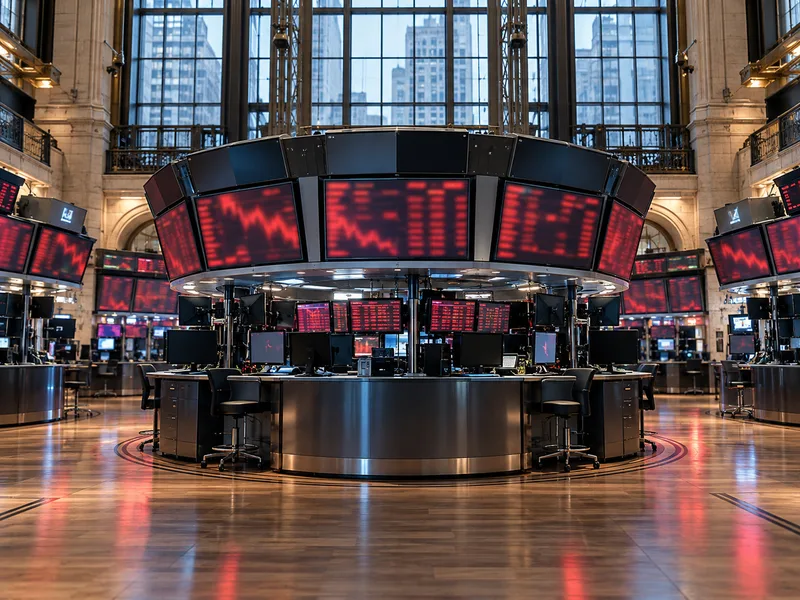
This sense of caution is reflected in semiconductor stock prices. On the 4th (local time), Micron Technology and Nvidia fell in the U.S. stock market, and the Philadelphia Semiconductor Index also fell by about 3.1%. On the other hand, the Dow rose 3.04%, and the S&P 500 and Nasdaq rose 1.58% and 1.44%, respectively, showing a conflict between the weakness of semiconductors and the strength of the overall market.
Even in the same AI industry, the stock price trend was different. Existing big tech companies such as Amazon, Meta, Alphabet, and Microsoft showed strong performance, while data center operators such as Applied Digital and Irene plummeted. If the construction of new data centers is restricted, the burden on companies that invest large amounts of money to expand facilities may increase. There is an assessment that the burden on each company may vary depending on its dependence on investment in new facilities.
This election is not the first time data center regulations have emerged. Governor Abbott restricted new data centers from connecting to the power grid last August and even temporarily suspended environmental licensing in September. Inojosa's election raised concerns that such restrictions could lead to a more comprehensive suspension of authorizations linked to resident protection legislation.
Additionally, it is difficult to equate the possibility of strengthening data center regulations with the collapse of AI investment. There is also an analysis that projects that have already completed financing and contracts or are under construction will not be halted solely due to the election results. In the short term, the speed of approval and cost burden for new projects rather than existing orders are key variables. Domestic semiconductors also need to be approached by distinguishing between damage to the overall industry and stock price adjustments due to policy uncertainty.
#### Expectations have changed due to the Democratic Party's landslide victory… Battery and renewable energy highlighted
Batteries and new and renewable energy are industries where policy expectations are focused after the Democratic Party's victory. As the Democratic Party has placed emphasis on clean energy tax credits and support for electric vehicles and renewable energy, there are predictions that it may check the reduction of related systems or pursue restoration of support. Domestic companies that have secured a local production base in the United States may also be affected by these policy changes.
However, reflecting expectations in the stock price and recovering performance are separate issues. In the battery industry, it is necessary to check whether customer orders, factory operation rates, and profitability are improving along with the specific details of policy support. For new and renewable energy, it is also important whether discussions on expanding support lead to actual project commencement and equipment orders.
Energy storage systems (ESS) have two variables at the same time. Strengthening eco-friendly policies is favorable, but adjusting the pace of data center investment is a factor that forces us to reexamine the demand outlook for related power infrastructure. Therefore, rather than lumping batteries and ESS into one policy beneficiary, it is necessary to distinguish the sales structure of electric vehicle use, power grid use, and data center-linked businesses.
Bio should be examined separately between policy expectations and interest rate variables according to election results. There are predictions that interest in the healthcare sector may increase after the Democratic Party takes control of Congress, but it is difficult to connect this to direct benefits for all domestic new drug development companies. Changes in U.S. medical policy and the clinical, approval, and technology export performance of individual bio companies are different investment variables.
The decline in U.S. Treasury yields as the election results were reflected is a favorable backdrop for growth stock investment sentiment. However, it is difficult to directly connect the one-day decline in government bond yields with the policy decision of the Federal Open Market Committee (FOMC) in December. We need to check how future oil prices, inflation, and employment indicators change market expectations about the interest rate path.
In the bio industry, stock prices can vary depending on not only oil prices and market interest rates, but also individual companies' clinical and approval schedules and technology transfer performance. It is worth noting that, rather than the common material of 'Democratic Party victory,' differentiation between stocks may appear depending on clinical schedule, possibility of approval, financial capacity, and quality of technology transfer contract.
#### Tariffs are still in Trump's hands... Complicated calculation method for shipbuilding and automobiles
For automobiles, there may be expectations of tariff relief as Congress strengthens trade policy checks. However, even if the Democratic Party pushes for a tariff withdrawal bill, President Trump can veto it, and the executive branch's trade authority remains. It is reasonable for the investment logic of the automobile industry to focus on the 'possibility of easing trade pressure' rather than the 'confirmation of tariff withdrawal'.
The shipbuilding industry is an industry that needs to check policy continuity after the election as expectations for cooperation with the Trump administration have been reflected in its stock price. However, there are limits to viewing MASGA (Make American Shipbuilding Great Again), a Korea-US shipbuilding cooperation initiative, as an agenda exclusive to a specific political party. This is because restoring the competitiveness of the U.S. shipbuilding industry and shipping is an issue that both Democratic and Republican parties have been pursuing together.
The broad framework of cooperation can be maintained even after the Democratic Party takes over Congress, but the actual scope of benefits must be considered separately. Depending on whether overseas construction of U.S. ships is permitted and local investment conditions, opportunities for domestic shipbuilders may expand to new ship orders or focus on maintenance, repair, and overhaul (MRO), block supply, and local shipyard business.
Robots and entertainment need to be approached by focusing on individual industry schedules and business performance rather than whether they directly benefit from the U.S. election. The robot must observe expectations for the release of new products and business strategies ahead of CES in January next year, but must distinguish whether interest in the exhibition leads to actual customer acquisition and sales.
Entertainment is interested in the diplomatic schedule around the Asia-Pacific Economic Cooperation (APEC) summit to be held in Shenzhen, China in November. However, holding the summit itself does not guarantee the expansion of performances or content distribution in China. If related expectations are reflected in the stock price, it must be confirmed whether actual performance approval and business announcements follow.
Cosmetics is an industry that will be evaluated based on each company's performance rather than new political ingredients. The criterion for judgment is whether increased exports and expansion of distribution channels lead to improvements in profit margins as well as sales.
Construction is an area where expectations are presented for easing tensions surrounding Iran and Ukraine and ending the war. It is difficult to predict the end of the war or the ordering of reconstruction projects based solely on the results of the U.S. midterm elections. In order for reconstruction expectations to become concrete investment logic, follow-up procedures such as financial support, project announcements, and contract signing must be confirmed.
Virtual assets also need to be classified into separate price and supply and demand flows rather than assuming the short-term rebound as an election benefit. We must be wary of judging policy direction or trend changes based solely on daily movements.
After the midterm elections, market attention is focused on how much money will move from semiconductor to non-semiconductor industries. Also of interest are the impact of AI data center regulations on actual orders and performance forecasts, and whether environmentally friendly policies are being enacted.
In the domestic stock market, attention is paid to the direction of semiconductors, policy changes in batteries and renewable energy, the bio interest rate environment, shipbuilding's actual orders, and whether consumer goods performance improves. With buying power spreading to non-semiconductor industries after the election, stock price trends by industry are expected to vary depending on whether policy expectations lead to actual orders and orders received, and improvements in corporate performance.