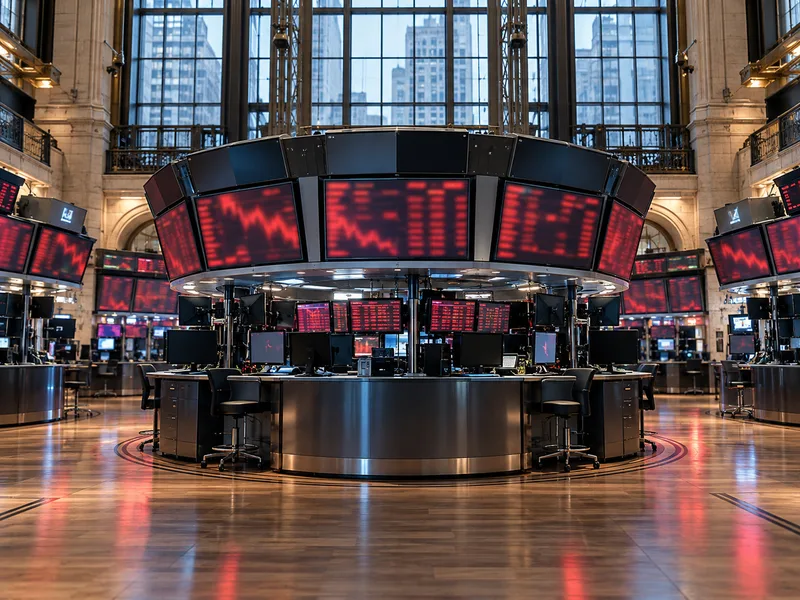
Selling off semiconductors due to concerns over AI regulations… US stock market capitalization of $3 trillion evaporates, VIX surges nearly 70%... MSCI Korea index plunged 12.56%
Key market trends
- ① Selling off semiconductors… Volatility index close to 30 during the day
The U.S. stock market plummeted as concerns about data center regulations spread after the midterm elections. All 11 industries fell, and the stock market capitalization decreased by about $3 trillion.
In particular, the selling of semiconductors was strong. The semiconductor industry recorded its largest drop since the day of the tariff shock, with Nvidia plummeting by 8%, Micron by 14%, and Broadcom by about 8%. Among the top 30 stocks by market capitalization, the only one that rose was Costco.
The volatility index (VIX) rose 69.66% to 28.18 and was close to 30 during the day. Analysis has shown that program listings have increased their decline as algorithmic trading linked to increased volatility operates.
There were also observations that the hedge fund's positions were liquidated all at once. Nomura analyzed that the intensity of selling increased sharply as some hedge funds began confirming profits ahead of the end of the year. Rumors of a large-scale liquidation of a specific fund have also circulated in the market, but have not been confirmed, so the actual scale and impact require further confirmation.
- ② Elections are an AI risk… Concerns over data center regulation spread
After the midterm elections, market attention quickly shifted from political uncertainty to data center policy. In some regions, including Texas, candidates critical of data center development won, and voices calling for stronger regulations due to power and environmental issues grew louder in the political world.
The market is reacting to the possibility that delays in the start of new data centers will lower the outlook for AI investment and semiconductor demand. Some even mentioned the possibility that many of the data centers scheduled for the future may be delayed or have their plans changed.
There are also counterarguments. The focus of data center regulation is on local community burdens such as power bills, water use, and tax benefits rather than the AI industry itself, so the possibility of stopping the entire investment cycle is limited.
In fact, Open AI reaffirmed its policy to cover electricity costs and disclose water, noise, and energy usage to prevent the electricity bills of residents near the data center from rising. It was decided to reduce consumption during peak electricity hours and set employment goals for local residents.
- ③ Even the same AI is different… Differentiating between existing and new businesses
Even if regulations become a reality, they will not have the same impact on all AI companies.
For hyperscalers that already operate data centers, it is assessed that the value of existing infrastructure may increase as new entry becomes more difficult. On the other hand, the burden may increase for neocloud companies that have relatively weak financial power and are highly dependent on new data center construction.
The movement to consider AI investment scale and cash flow is also growing stronger. As stock purchases by major companies such as Alphabet, Amazon, Microsoft, Meta, and Oracle decreased, concerns continued that the massive AI investment costs were weakening the ability to return shareholders.
Ultimately, the market is moving to a stage where it is determined who can cover the investment costs and lead to actual profits rather than the growth of AI itself.
Market Man's Perspective
The domestic stock market plunged the previous day due to concerns about data centers. Japan and Taiwan also showed weakness, but the domestic stock market, where Samsung Electronics and SK Hynix account for a large portion of the index, was more affected. On the other hand, the number of rising and falling stocks was about 3 to 4, so the entire market did not collapse compared to the index decline.
Things are likely to get rougher today. The MSCI Korea index plunged 12.56% and overnight futures fell 7.87%. As selling off centered on semiconductors continued in the United States, there may be significant volatility in Samsung Electronics, SK Hynix, and semiconductor materials, parts, and equipment in the early trading period.
The most important thing is the intensity of foreign selling. The recent foreign selling is more in response to news related to AI and data centers rather than a mechanical reduction in the Korean share. If selling continues at a certain intensity during the day, it is difficult for waiting buying pressure to come in.
On the other hand, the current stock price is moving at a level that denies the memory supply shortage and long-term contract situation presented by Samsung Electronics and SK Hynix in the conference call. Delaying some data center projects is one thing, but resolving existing supply and demand shortages is another matter.
A short-term bottom cannot be predicted. In a situation where supply and demand are distorted, stock prices may move more than fundamentals as selling calls for selling again. However, the gap between actual performance changes and recent declines is also growing. In the process of calming down volatility, it is necessary to check the supply and demand changes in stocks that have suffered greater losses after being purchased by institutions and Foreign Investors, along with existing leading stocks.
Today's checkpoint
Semiconductor: Samsung Electronics, SK Hynix, early market selloff and whether the decline will recover
Foreign Investors: Check whether the selling intensity centered on electrical and electronics slows down during the day.
Supply and Demand: After selling the program, whether there will be an influx of opposing purchases from institutions and pension funds.
AI Regulation: Will Concerns About Data Center Delays Lead to Lower Earnings Outlook?
Inside the market: Whether the index plunges and the gap between the number of stocks rising and falling continues?
Key indicators
Dollar Index 101.59 (+0.03%)
International oil price $90.52 (+2.72%)
Volatility Index 28.18 (+69.66%)
US 10-year Treasury bond interest rate: 4.83%
MSCI Korea Index -12.56%
Night Futures -7.87%
Source: Market Man's stock story t.me/shmstory
YouTube: Sihwangman TV www.youtube.com/@blueoak1004
This article was rewritten from Shihwangman's Stock Story Telegram post with the author's consent. All content may contain errors and cannot be used as a basis for buying or selling as it is not a recommendation to buy or sell. The content of this post cannot be used as legal basis under any circumstances.