
Dow fell 3.44%, S&P 500 fell 4.36%... Philadelphia Semiconductor Index 12.25%↓ Overlapping with sluggish sales of Qualcomm smartphones... Pay attention to employment report amid rebound in oil prices and Fed tightening remarks
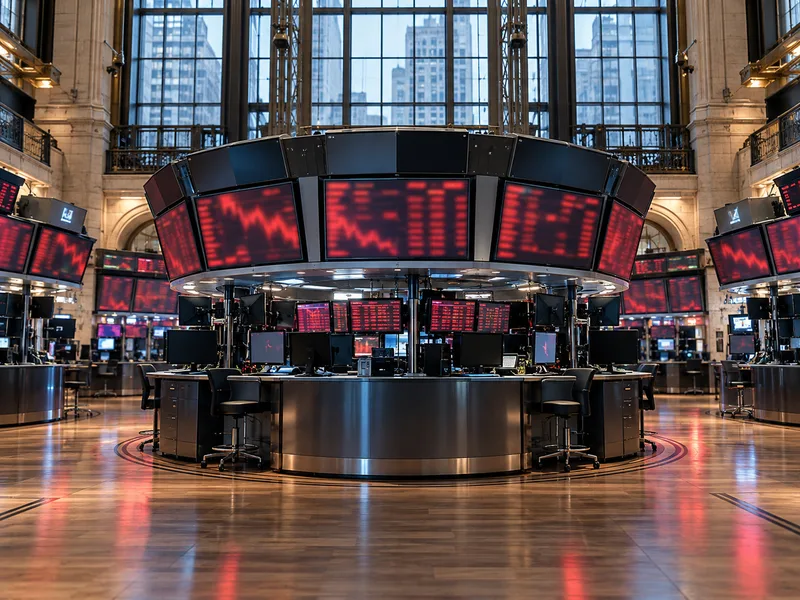
The New York stock market plunged on the 5th (local time) due to concerns that the pace of investment in artificial intelligence (AI) infrastructure may slow down. The three major indices gave back all their gains from the previous day's election rally, and the Nasdaq fell more than 10% from its high point and entered a correction phase.
On this day, the Dow Jones Industrial Average closed at 51,523.06, down 1,833.06 points (3.44%) from the previous trading day. The Standard & Poor's (S&P) 500 Index closed at 7353.73, down 334.89 points (4.36%), and the Nasdaq Composite Index closed at 24,315.00, down 1,421.51 points (5.52%).
The Philadelphia Semiconductor Index fell 12.25% to 9011.14. Nasdaq is about 11.9% lower than its all-time high closing price on October 6th.
From resolving election uncertainty to concerns about data center regulations
The Democratic Party's control of the Senate and House of Representatives, which boosted the market the previous day, turned into a burden today. It was highlighted how the new political structure could limit the expansion of the AI industry. With the Democratic Party winning in areas where opposition to data center development has grown, investment sentiment has been weighed by speculation that new facility construction screening may be strengthened or the project schedule may be delayed.
The reason this concern is focused on semiconductor stocks is because the speed of data center expansion affects chip, memory, and server orders. If the construction schedule is delayed, the supply of related equipment and sales may also be delayed. The expectations built up on the premise of rapid capacity expansion were dashed all at once on this day.
However, it has not yet been revealed what form the regulations will actually take and whether companies will change their investment plans.
Even Qualcomm's performance is burdened… Chip, memory, and server declines together
In the semiconductor industry, policy concerns and corporate performance burden overlapped. Qualcomm's smartphone semiconductor sales for the fourth quarter of fiscal 2026, which Qualcomm announced the day before, amounted to $5.137 billion, down 26% from the same period last year and below market expectations. The company stated that costs are rising across the board, including wafer manufacturing, advanced packaging, and memory.
Profit forecasts for the next quarter also fell short of expectations. Qualcomm presented its adjusted earnings per share outlook for the first quarter of fiscal 2027 (October to December) at $2.15 to $2.35. The median price of $2.25 was slightly lower than the market expectation of $2.27.
Qualcomm stock price fell 9.49%. Nvidia fell 9.26% and AMD fell 17.26%, and memory and storage companies Micron and SanDisk also fell 17.46% and 22.26%, respectively.
The selling trend also continued for server and cloud companies. Server company Dell Technologies fell 14.89%, and AI cloud companies Nevius and Coreweave fell 14.94% and 9.83%, respectively. Large technology stocks Meta fell 3.96%, Amazon fell 2.19%, and Alphabet A shares fell 2.20%. Tesla also fell 10.77%.
Conversely, stocks with good performance rose. Advertising technology company AppLovin soared 31.04%. AppLovin's third quarter sales were $2.185 billion, up 55% from the same period last year, and net profit was $1.439 billion, up 72%. The fourth quarter sales forecast was between $2.365 billion and $2.395 billion, exceeding the market expectation of $2.25 billion.
Oil prices rebound... Reduced unemployment claims and improved productivity
The decline in oil prices, which had boosted the stock market the day before, did not continue. As anxiety over Middle Eastern crude oil transportation grew again due to the news of the oil tanker attack, West Texas Intermediate (WTI) rose 2.72% to $90.52 per barrel, and Brent crude oil closed at $98.29, up 3.88%.
Employment indicators showed a decrease in new unemployment benefits claims. According to the U.S. Department of Labor, the number of new claims for the week ended October 31 was 189,000 on a seasonally adjusted basis, down 6,000 from the previous week's revised number. Meanwhile, the number of continuing claims, which refers to the number of people already receiving benefits, increased by 23,000 to 1.718 million in the week ended October 24. Although new claims have decreased, claims continue to increase, so it is necessary to check whether the overall labor market is improving through additional indicators.
The provisional labor productivity in the non-farm enterprise sector in the third quarter increased by 3.6% at an annual rate compared to the previous quarter. On the same basis, hourly compensation increased by 2.9%, and unit labor costs decreased by 0.7%. As the rate of productivity growth exceeded the rate of increase in hourly compensation, the burden of labor costs per unit of production decreased.
Fed tightening remarks... The next hurdle is hiring in October
There were continued calls from within the Federal Reserve System (Fed) to raise interest rates further. Beth Hammack, president of the Cleveland Federal Reserve Bank, said that in order to return inflation to the 2% target, monetary policy must move to a restrictive level, that is, high enough to suppress the economy. In this process, he explained that he prefers making small adjustments more frequently rather than making large increases all at once.
Despite the austerity remarks, the U.S. 10-year Treasury bond interest rate fell from the previous day to about 4.84% around 3 p.m. in New York. It is interpreted that the preference for safe assets due to the sharp decline in stock prices supported the demand for government bonds.
The market is paying attention to the US October employment report, which will be released today (6th) at 10:30 PM Korean time. New employment, unemployment, and wage growth rates are expected to be the yardstick for assessing whether the Federal Reserve will raise interest rates further.

