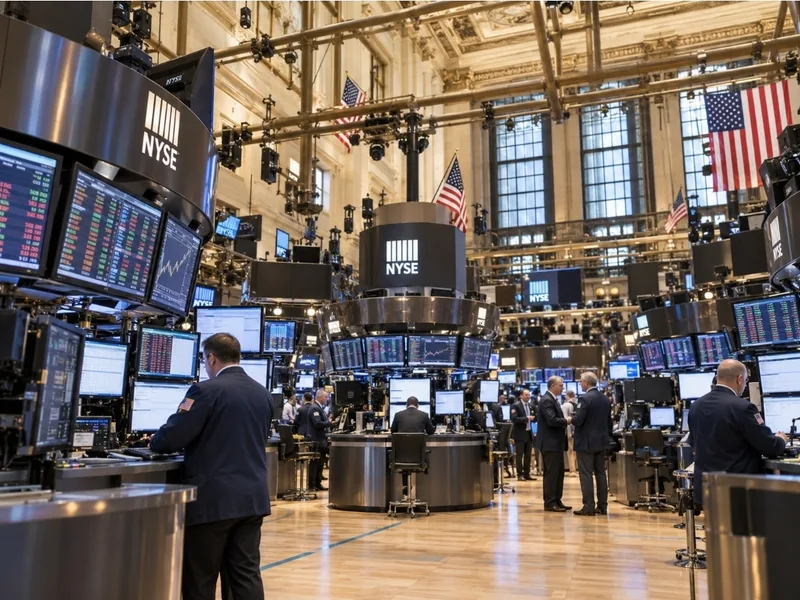
Inflow of low-price purchases of technology stocks and semiconductors... Limited rebound after plunge, volatility continues due to concerns about CTA forced sales and data center regulations
Key market trends
- ① Buying at low prices after $3 trillion has evaporated… Semiconductor rebound
After a record plunge, the U.S. stock market saw an influx of low-price purchases, especially technology stocks. Four industries, including technology and communication services, rose, while seven industries, including consumer staples, real estate, and finance, fell.
On Thursday, the S&P 500 market capitalization fell by about $2.9 trillion, with the Magnificent 7 losing about $1 trillion. NVIDIA recorded the biggest drop after the DeepSeek shock.
As the fall was large, Nvidia, Meta, and Alphabet rebounded on this day, and semiconductor stocks such as AMD, Micron, and Broadcom also rose. Lam Research soared on news of a large-scale share buyback.
The extent of the rebound was limited compared to the previous decline. A Federal Reserve official's remarks mentioning stronger-than-expected U.S. employment and the possibility of additional tightening stimulated the interest rate burden again.
- ② Data center regulations will affect demand by 2027
Analysis has also begun to suggest that concerns over data center regulations, which recently triggered a sharp decline in semiconductors, have been overreflected in their impact on actual demand.
Susquehanna estimated the unapproved amount to be about 60GW out of about 148GW of data center projects underway between 2025 and 2030. It was estimated that if regulations were strengthened and a negative scenario of 20% of this being canceled was applied, about 12GW could be affected.
On the other hand, most of the projects scheduled for operation in 2027 have already been approved, and a significant portion of the 2028 volume has also been approved. Even in the worst-case scenario, the decline in semiconductor sales was estimated at up to 10%.
There is also an analysis that regulation can actually increase the competitiveness of existing businesses. When it becomes difficult to build new data centers, the value of existing facilities for hyperscalers that have already secured infrastructure increases, and reducing investment can reduce the debt and cash flow burden that has recently emerged.
Semiconductor valuations also fell rapidly. The Philadelphia Semiconductor Index's advance price-to-earnings ratio fell to 15 times. This is the background to the assessment that the recent decline in stock prices largely reflected the possibility of a decrease in demand due to data center regulations.
- ③ Behind the sharp decline was supply and demand… CTA forced sale
Analysis that it is difficult to explain this week's sharp decline with AI fundamentals alone is also gaining strength.
JP Morgan analyzed that the forced position reduction of the system fund increased the decline. Since CTA and trend-following strategies respond to price and momentum rather than corporate performance, leverage was reduced when the index fell quickly, and this selling pulled the index down again, triggering additional selling.
It was estimated that more than $60 billion worth of stock sales occurred at the end of the market alone, and about 90% of this was concentrated in semiconductor, NASDAQ 100, and technology stock ETFs. There remains the possibility of additional selling in the coming days.
Barclays also raised the possibility that large-scale stock index futures selling will continue in the short term. The Wall Street Journal reported that hedge funds' position reduction was the largest in 10 years.
It is necessary to consider the possibility that the stock price fluctuations were greater than the actual negative news due to mechanical selling overlapping with fundamental changes.
Market Man's Perspective
This week the market very quickly priced in a new variable: data center regulation. Stock prices of semiconductor and AI infrastructure companies plummeted even before it was confirmed how low the performance estimates would actually be.
It is difficult to feel reassured in the short term. It is difficult to conclude that the reduction of System Fund and CTA positions has completely ended, and news surrounding the pace of AI investment continues to emerge, such as reports of Microsoft's reorganization of external data center partners. Antropic's listing schedule and the possibility of corporate value adjustment may also affect investor sentiment.
On the other hand, looking at the timetable for data center projects, there is no immediate basis to believe that memory demand will decline sharply next year. There are many projects that have already been approved, and the supply shortage and long-term contracts confirmed by Samsung Electronics and SK Hynix in a recent conference call have not yet changed. It's time to check the gap between stock prices and actual performance.
As U.S. employment came out stronger than expected, interest rate variables also emerged again. Even if AI regulations and supply and demand shocks subside, interest rates are not likely to move favorably all at once. Therefore, rather than judging that the bottom has been confirmed with just one rebound in technology stocks, it is necessary to check whether supply and demand and performance outlook are stable together.
The MSCI Korea index rose 4.04% and overnight futures rose 1.6%. In the domestic stock market next week, whether foreign selling actually slows will be more important than the extent of the rebound in semiconductors, which have plummeted.
Checkpoint next week
Semiconductor supply and demand: Check whether foreign selling intensity is slowing at Samsung Electronics and SK Hynix
System selling: Whether CTA/hedge fund position reduction leads to additional selling
Data Center: Check whether regulatory discussions actually lead to project cancellation and lower performance forecasts.
Interest rates: Changes in US interest rates and expectations of further Fed tightening after strong employment
Leading stock: Among the semiconductor and AI stocks that suffered significant declines, whether performance and institutional supply and demand are maintained will recover.
Source: Market Man's stock story t.me/shmstory
YouTube: Sihwangman TV www.youtube.com/@blueoak1004
This article was rewritten from Shihwangman's Stock Story Telegram post with the author's consent. All content may contain errors and cannot be used as a basis for buying or selling as it is not a recommendation to buy or sell. The content of this post cannot be used as legal basis under any circumstances.