S&P 500 rose 0.31%, Dow fell 0.46%... Philadelphia Semiconductor Index up 4.21%, employment increased by 165,000 in October... Fed's additional tightening warning exceeds expectations
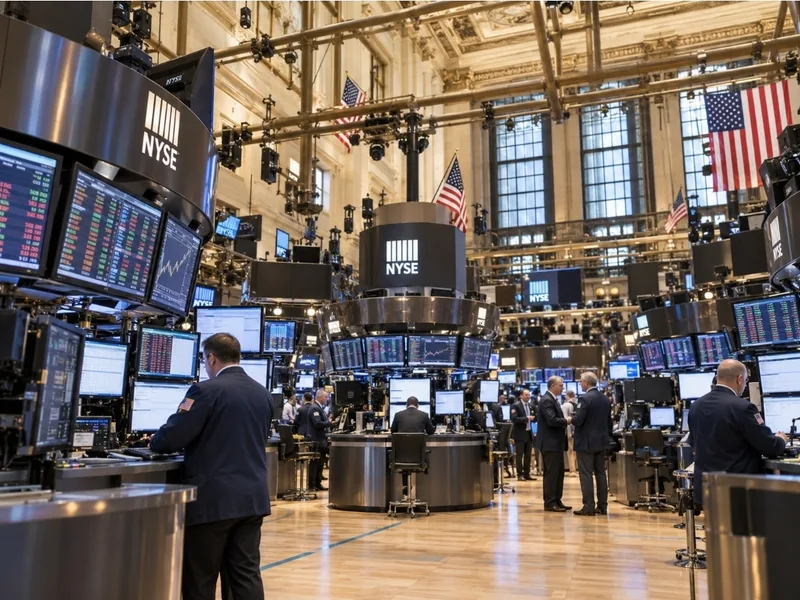
On the 6th (local time), the New York stock market recovered some of the losses from the previous day's plunge, especially semiconductor stocks. The Nasdaq rebounded as low-price buying flowed into technology stocks, but major indices closed mixed as the better-than-expected employment indicator raised concerns about additional interest rate hikes by the Federal Reserve.
On this day, the Dow Jones Industrial Average ended trading at 51,285.73, down 237.33 points (0.46%) from the previous trading day. The Standard & Poor's (S&P) 500 index rose 23.13 points (0.31%) to 7376.86, and the Nasdaq Composite Index rose 264.43 points (1.09%) to 24,579.42. Despite the rebound today, the Nasdaq fell for four consecutive weeks on a weekly basis.
Semiconductor stocks rebound... Concerns about slowdown in AI investment persist
Semiconductor stocks, which had been heavily sold the previous day, led the rebound. The Philadelphia Semiconductor Index closed at 9390.25, up 4.21%. Nvidia closed at $186.64, up 2.78%, and Micron rose 5.1%. AMD and SanDisk also rebounded.
These stocks plunged the day before due to concerns that regulations on data center construction may be strengthened and the pace of investment in artificial intelligence (AI) infrastructure may slow down after the Democratic Party's midterm election victory. The buying trend returned that day, but it was not enough to recover the previous day's decline. Based on the closing price, Nasdaq remained about 10.9% lower than the all-time high recorded on the 6th of last month.
Semiconductor equipment company Lam Research rose 8.2%. The company announced the previous day that its board of directors had approved a share buyback worth $25 billion in addition to the remaining limit of the existing program. A quarterly dividend of $0.33 per share was also decided.
There was also differentiation in stock prices according to each company's performance and outlook. Accommodation sharing company Airbnb rose after raising its sales growth forecast for this year. On the other hand, business software company Atlassian's quarterly performance exceeded market expectations, but fell sharply as concerns about a slowdown in future growth emerged.
Employment stronger than expected... Expectations for interest rate hike in December strengthen
The employment report released today heightened caution about further tightening. According to the U.S. Bureau of Labor Statistics (BLS), nonfarm payrolls in October increased by 165,000 from the previous month, significantly exceeding market expectations of 65,000. The unemployment rate fell from 4.2% in September to 4.1%.
The employment increase in August and September was also revised upward by a total of 84,000 people. Average hourly wages in the private sector rose 0.4% compared to the previous month and 3.1% compared to the same month last year. As employment growth appears to be stronger than expected, speculation that the Federal Reserve may take additional tightening measures to suppress prices has gained weight.
The possibility of an interest rate increase in December reflected by the interest rate futures market increased from the high 60% range the previous day to 78% after the employment report was announced.
San Francisco Federal Reserve Bank President Mary Daley also said in a CNBC interview that day that additional tightening would be necessary to lower high inflation. While taking into account the sharp decline in technology stocks and market volatility, the timing and extent of the interest rate increase will be carefully judged after confirming additional information.
Consumer price forecasts are expected to decline... Pay attention to CPI and PPI next week
Meanwhile, the inflation rate expected by consumers has decreased. The University of Michigan's preliminary consumer sentiment index for November was 51.0, up from 48.0 the previous month. Expected inflation for the next year fell from 4.7% to 4.3%, and long-term expected inflation fell from 3.5% to 3.4%.
However, because the survey period was from October 20 to November 2, the results of the midterm elections and the impact of the subsequent stock market plunge were not reflected. The University of Michigan explained that despite improving consumer sentiment, concerns about the high cost of living persist.
Expectations for a diplomatic solution to the Iran war, which grew after the U.S. midterm elections, exerted downward pressure on international oil prices. However, as attacks on ships in Middle Eastern waters continued, anxiety over crude oil supply was not resolved.
Next week, the US October Consumer Price Index (CPI) will be announced on the 10th and the Producer Price Index (PPI) on the 13th. If prices rise sharply following stronger-than-expected employment, the outlook for further interest rate hikes may strengthen. The slowdown in prices is expected to be a key variable in determining the sustainability of the technology stock rebound.