KOSPI and KOSDAQ close higher after plummeting... Foreign Investors' supply and demand remain uncertain Hyundai Motor Securities expects supply and demand to improve in mid-to-late November... Hana Securities forecasts at least 3 months
The outlook of securities companies is divided regarding the possibility of a rebound in the domestic stock market after the U.S. midterm elections. After the past midterm elections, KOSPI rose by an average of 10.8% in the six months, but this year, the scale of foreign selling exceeded the highest level just before the past midterm elections. Even if political uncertainty decreases, it is unclear whether foreign funds will return immediately.
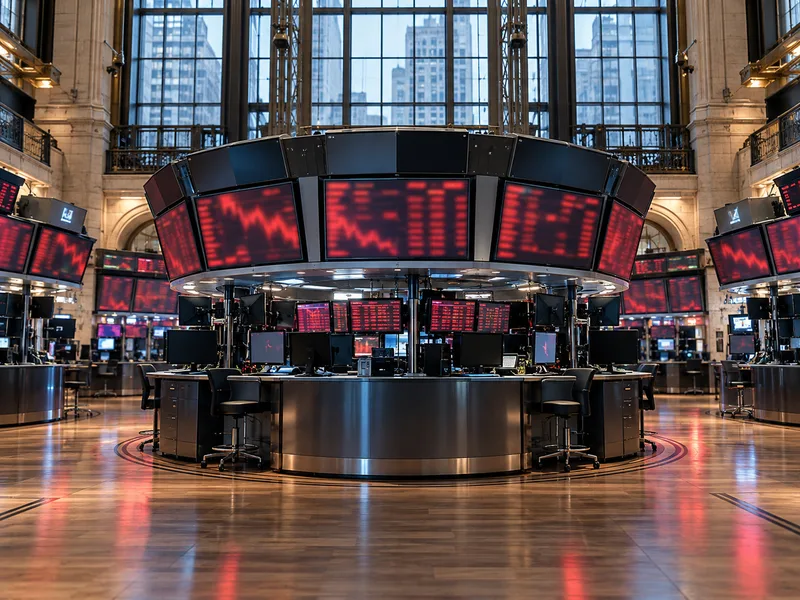
On the 4th, KOSPI fell to the 5,400 mark during the day, but made up for the loss and closed at 5,683.80, up 0.62%. KOSDAQ also fell below the 700 mark during the day, but ended trading at 714.95, up 1.50%. Both indices overcame sharp falls and closed higher, but showed significant volatility throughout the day.
In this election, the Democratic Party secured a majority in the Senate and House of Representatives. The high cost of living and dissatisfaction with the Trump administration's economic policies are considered the reasons for the Democratic Party's advance. President Donald Trump announced his intention to accept the election results and cooperate with the Democratic Party.
Congressional checks will be strengthened, but the president's authority in the areas of customs and foreign affairs will be maintained. Negotiations surrounding the budget and fiscal policy may become difficult due to the Democratic Party's control of Congress, and the possibility of strengthening regulations on the artificial intelligence (AI) industry has also emerged as a burden on investment sentiment in U.S. technology stocks.
#### A rebound is expected in mid-to-late November… Foreign Investors must return at least 3 months
Hyundai Motor Securities paid attention to the possibility of foreign funds returning to the domestic stock market from mid-to-late November, when major events such as the U.S. midterm elections are completed. The Democratic Party's control of Congress could have a positive effect on the solar and energy storage system (ESS) industry, but the impact on semiconductors was believed to be limited.
Hana Securities diagnosed that a longer period of time is needed for foreign supply and demand to recover. In a report on the 4th, researcher Kyung-soo Lee analyzed past cases where large-scale net selling by Foreign Investors and a sharp decline in stock prices overlapped, and stated that at least three months may be needed for a full-fledged recovery.
In similar situations in the past, the median KOSPI rate of return was 0.1% after 1 month and -2.0% after 3 months. It increased to 16.3% after 6 months and 39.3% after 12 months. In an analysis by Hana Securities, the rate of Foreign Investors converting to net purchases after 6 months was 57%. There were many cases in which foreign purchases did not follow even when stock prices recovered.
The U.S. credit market is also putting pressure on foreign supply and demand. According to Hana Securities, the spread on U.S. high-yield corporate bonds recently expanded from 2.64% to 3.12%. The correlation coefficient between foreign net buying intensity and high yield spread was -0.46, showing a relationship in which domestic stock purchases weakened as U.S. credit risk increased.
#### Average rise of 10.8% in 6 months after election… This year the starting point is different.
Considering the impact of foreign selling, it takes time to recover, but the stock price trend after the U.S. midterm elections was different. According to Shinhan Investment & Securities, KOSPI rose an average of 4.7% in the three months and 10.8% in the six months since the midterm elections. In five of the six elections from 2002 to 2022, Foreign Investors net purchased KOSPI over the next 20 trading days.
This year, the intensity of foreign selling is stronger than in the past. From October 1 to November 2, Foreign Investors net sold 19.14 trillion won in KOSPI. It is 0.4% of the market capitalization, exceeding the previous peak of 0.31% in 2006 just before the midterm elections.
After the past midterm elections, there were many cases where stock prices rose and foreign net purchases occurred together. On the other hand, when large-scale selling by Foreign Investors occurred, the median KOSPI return remained negative even after three months. This is why it is difficult to apply the average growth rate since the election to this year's market.
Shinhan Investment & Securities analyzed that the rate of increase in stock prices after the past midterm elections did not vary significantly depending on the composition of political parties in Congress. Researcher Jinhyuk Kang explained that market conditions such as macroeconomics and corporate profits had a greater impact on the direction of the stock market than the election results.
Although the power structure of the U.S. Congress has changed due to the midterm elections, the Trump administration's tariff and export control authority is maintained. The domestic stock market also closed higher, making up for the sharp drop on the day, but the burden of foreign selling still remains. Future stock market trends are expected to be influenced by foreign supply and demand, corporate profit prospects, and U.S. credit market conditions.