EU's Defense Financing Program Sparks Changes in Export Strategies
The European Union (EU) has initiated an additional call for applications for its €213 billion ($225 billion) defense financing program, prompting a shift in strategies for Korean defense companies aiming to export to Europe. The EU's SAFE program, with a total fund size of €1,500 billion ($225 trillion), limits the proportion of offshore components in supported weapon systems to 35% or less. While Europe's increased military spending has led to a rise in weapon purchases, the traditional approach of exporting fully assembled products from Korea is becoming less viable for large-scale procurement projects.
The EU Commission launched its second application round on October 29th for unallocated funds, prioritizing air defense, missile defense systems, drones, anti-drone systems, ammunition, and missiles. Applications from 19 member states have been approved, with loan agreements signed with 16 countries and approximately €135 billion disbursed to 11 nations. As Europe's defense funding allocation expands, the competition for contracts is increasingly focused on weapon performance, pricing, and the location of production facilities and supply chains, rather than just the final product.
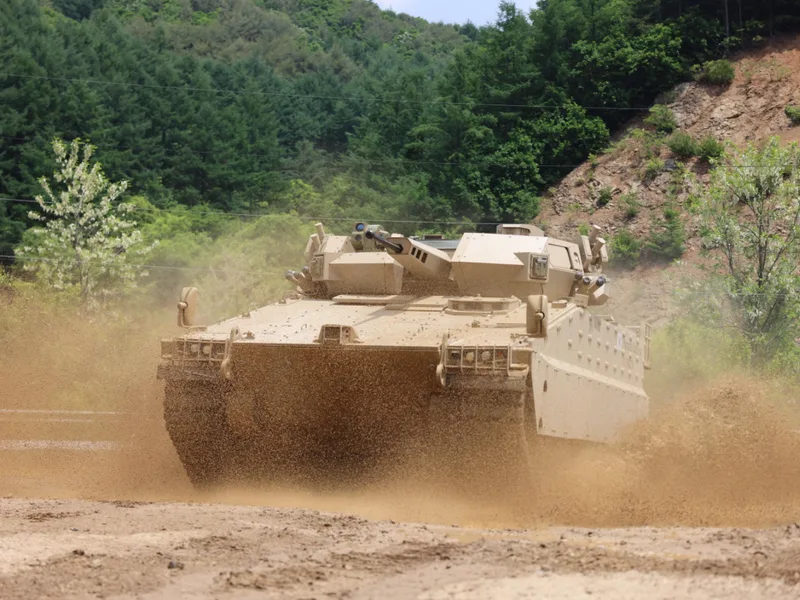
This shift in focus has been evident in recent contract awards. Hanwha, despite proposing an 80% localization rate, failed to secure a contract for armored vehicles in Romania, which instead went to a U.S. company planning to expand its European production. This trend highlights the growing importance of local production and supply chain integration in Europe's defense industry.
Europe Demands More Than Just Weapons: Factories and Jobs
In response to Russia's military threat, Europe is increasing its defense budget and strengthening procurement conditions to ensure that the funds benefit the regional industries. SAFE, a long-term loan program, supports member states' defense acquisitions. The program requires that the cost of components produced outside eligible regions, including the EU, the European Economic Area (EEA), and the European Free Trade Association (EFTA), as well as Ukraine, must not exceed 35% of the total weapon system.
While there is no explicit ban on importing weapons from South Korea, businesses utilizing SAFE financing must consider the origin of components and the qualifications of suppliers. This means that companies previously exporting finished products from South Korea will need to consider expanding local production and sourcing components within Europe.
Poland is actively leveraging this policy to boost its domestic defense industry. Prime Minister Donald Tusk reaffirmed the country's commitment to allocate 89% of the designated funds to the Polish industrial sector during the SAFE agreement signing ceremony on May 8th. With an allocation of approximately €437 billion, Poland is pursuing a strategy that involves not only weapon acquisitions but also retaining production facilities and jobs within the country.
Europe's Shifting Procurement Policies: A New Frontier for Korean Defense Contractors
Poland's Ambitious Move: From Buying to Manufacturing
Poland, a significant purchaser of tanks and howitzers from South Korea, is now aiming to secure weapon manufacturing facilities and supply chains. According to Eugene Investment & Securities, Europe accounted for 69% of South Korea's defense contracts from 2022 to 2025, with Poland contributing a substantial 65%. Notably, 68% of these contracts were concentrated in artillery, multiple rocket launchers, tanks, and armored vehicles, highlighting the direct connection between Europe's procurement policies and South Korea's defense industry.
#### Romania's Armored Vehicle Tender: A Battle for Localization
The changing procurement landscape in Europe was evident in Romania's recent armored vehicle tender. Hanwha Aerospace, in an interview with the Romanian state news agency Agerpres last December, revealed plans to increase the localization rate of its Redback armored vehicles to a maximum of 80%.
Son Jae-il, the company's representative, outlined a vision to transform Romania from a mere purchaser into a production hub, creating over 2,000 direct and indirect jobs through the establishment of production, R&D, and maintenance facilities, along with technology transfers. The company also secured more than 30 local partners. The plan involved transferring the production process of key components such as the chassis and turret to Romanian companies and integrating them into the global supply chain.
Romania's Choice: Lynx Armored Vehicles from Rheinmetall
Romania has made a strategic decision, opting for Germany's Rheinmetall Lynx armored vehicles. The framework agreement, signed on May 29th, encompasses a substantial €3.37 billion deal, including 298 armored vehicles and derivative models. Notably, 232 of these vehicles are set to be funded through the SAFE program.
Rheinmetall's proposed plan for local industry development is detailed and comprehensive. Mihai Iurca, Chief of Staff to the Romanian Prime Minister, stated during the contract announcement, "More than 50% of production will be carried out in Romania or in cooperation with local companies." Rheinmetall intends to expand its existing production facilities and engage over 200 subcontractors in its supply chain.
Rheinmetall already had a production presence in Romania prior to this contract. In 2024, they acquired a stake in the local military vehicle manufacturer, Automecanica Medias, securing production facilities. This contract win will trigger an additional multi-million euro investment from Rheinmetall. While Hanwha proposed a high level of localization and new investments, Rheinmetall opted for expanding its existing production facilities and supply chain.
Local Production Strategies and Their Impact on Defense Contracts
The localization ratios of these two companies are calculated differently, and various conditions, including price, delivery, and technical evaluations, influence the final selection. While it is not definitive that the SAFE regulations caused Hanwha's bid failure, the established local production base of European defense companies poses a challenge for Korean enterprises.
Korean companies are taking action to address this. Hyundai Rotem is pushing for local production of the K2PL tank in Poland, while Hanwha Aerospace began construction on production facilities for the K9 self-propelled howitzer and the K10 ammunition carrier in Petresti, Romania, last February.
This expansion of local production is also changing the export strategies of domestic defense companies. If core components for European factories continue to be supplied from Korea, it creates export opportunities for domestic subcontractors. However, if the sourcing of components also shifts locally, the volume of production in Korea could decrease. Even with the same scale of complete product export contracts, the remaining production and component supply share in Korea may differ.
U.S. Trade Barriers: Lockheed Martin Partners with Germany
The dissatisfaction with Europe's defense procurement policies is not exclusive to South Korea. The Office of the U.S. Trade Representative (USTR) highlighted concerns in its March 2026 National Trade Barriers Report, specifically targeting the SAFE and European Defense Industrial Program (EDIP) requirements for regional production. The report warned of potential limitations on the procurement of U.S. weapons and disadvantages for European SMEs reliant on American components.
While the U.S. government points out these trade barriers, defense companies are expanding their production collaborations with European firms. Lockheed Martin, on July 7, signed a Memorandum of Understanding (MOU) with Germany's Rheinmetall for the joint production of ATACMS missiles in Europe. The company is also considering utilizing Rheinmetall's Unterlüss facility as a production hub.
Rheinmetall, a competitor that outbid Hanwha Aerospace in the Romanian armored vehicle tender, is now a partner with Lockheed Martin in their European production endeavors. As South Korean and American companies increase local weapon production in Europe, European defense firms secure an advantageous position by taking on production contracts for foreign enterprises.
EU's Push for Technological Independence and Control
The EU is not only focused on acquiring production facilities but is also aiming to reduce its reliance on foreign entities for weapons purchases. As such, they are negotiating for technological control, ensuring they have the ability to modify designs and replace components without restrictions from third parties.
SAFE, the Strategic Autonomy for European Defence, demands the right to alter designs and substitute parts for certain weapon systems, such as air defense and missile defense systems, without any limitations. Similarly, EDIP, the European Defence Industrial Policy, includes requirements for regional production and design control, meaning foreign companies must also secure the necessary rights for equipment upgrades, in addition to production facilities, to meet procurement conditions.
Korea's Role and Potential Expansion
As a security and defense partner with the EU, Korea can participate in the SAFE joint procurement. However, a separate agreement is necessary to expand the eligibility criteria for Korean companies and components. As of November 4th, there is no official confirmation of such an agreement being finalized.
EU's Additional Funding Round
The EU Commission's recent initiative, launched on October 29th, to raise an additional €213 billion targets the unallocated funds from the existing €1.5 trillion. Member states can submit their procurement demands for air defense, missile defense systems, drones, ammunition, and missiles. While negotiations continue for Korea's expanded participation, the EU is proceeding with funding allocations to member states based on previously approved loan plans.