Sungkwang Bend, Taekwang, and SeAH Steel receive actual orders from Canada… Additional orders from Alaska expected. When total U.S. steel imports decrease by 13.4%, Korean imports increase by 44%... Targeting local industry leaders
Expanding investment in North American liquefied natural gas (LNG) and energy infrastructure is emerging as a new order opportunity for the domestic steel industry. There was a series of contracts to supply steel pipes and piping parts for the Canadian LNG project, and POSCO International agreed to supply some steel materials for gas pipe production for the Alaska LNG project in the United States. However, as imports of Korean steel increased, the U.S. steel industry demanded additional response, targeting steel pipes as well. There are concerns that as business opportunities increase in North America, barriers to entry into the U.S. market may also increase.
According to the American Steel Institute (AISI), from October last year to September this year, US imports of Korean steel increased 44% compared to the previous 12 months. During the same period, overall U.S. steel imports decreased by 13.4%. The U.S. steel industry directly pointed to the increase in imports of Korean steel pipes and urged the government to investigate.
In the domestic stock market, expectations for additional orders for the Alaska LNG project are being reflected in stocks related to steel pipes and piping components. However, except for POSCO International's steel supply agreement, no direct supply contract to Alaska by a domestic steel pipe or fitting company has yet been confirmed. As the Korean government's investment has not been confirmed, it is necessary to distinguish between expectations and actual project progress.
#### Securing orders from Canada… Alaska expects additional orders
LNG investments in North America are leading to actual orders for domestic companies. In LNG terminals, fittings are used to connect or change the direction of pipes, and in long-distance gas pipes, steel pipes, which are steel pipes that transport natural gas, are used.
Sungkwang Bend and Taekwang, leading companies in the domestic pipe connection parts market, have secured supply from the Canadian LNG project. Sungkwang Bend signed a fittings supply contract worth about 25.5 billion won in the second phase of the Canadian LNG project last August. This corresponds to 10.38% of last year's sales.
Shinyoung Securities determined that Taekwang also received orders worth less than 10 billion won for the same project. In a report on the 25th of last month, Korea Investment & Securities estimated Taekwang's separate orders for the third quarter to be 89.6 billion won. The explanation is that orders from the United States are filling the gap in orders from the Middle East region. The results are not yet confirmed.
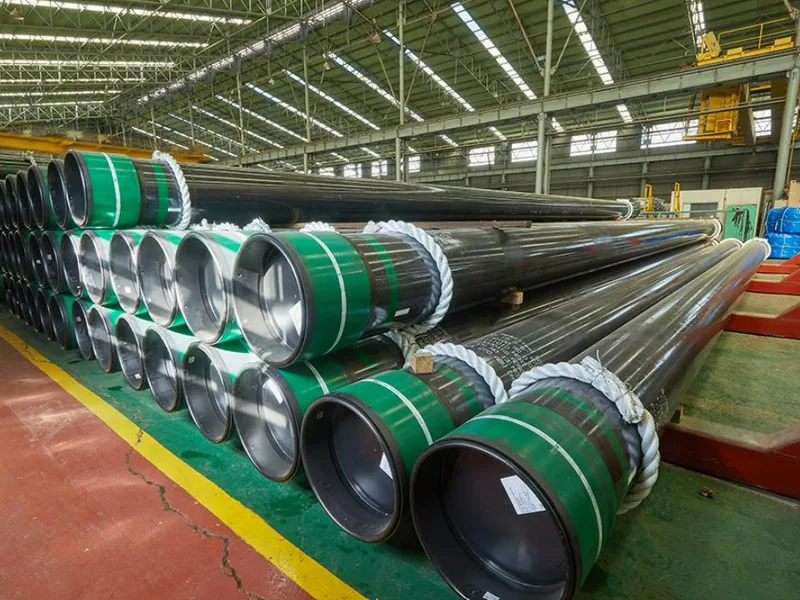
In the steel pipe field, SeAH Steel secured a contract to supply welded carbon steel pipes worth approximately KRW 98.1 billion to the Canadian natural gas pipeline project. The contract was signed in December last year, and the delivery end date last September was extended to the end of November this year. Nexteel and Husteel are also entering the U.S. energy steel pipe market, but no direct orders from Alaska LNG have been confirmed.
POSCO International's participation in the Alaska LNG project in the United States has become concrete. Glenfarne, the project developer, announced in January that POSCO International had agreed to supply some of the steel materials for gas pipe production. POSCO International has also been pursuing business investments and long-term purchases of LNG.
The steel pipe required for the first stage of Alaska LNG is approximately 725,000 tons. Glenfarne has signed preliminary supply contracts with Greece's Corinth Pipeworks and Germany's Europipe for about two-thirds of these. POSCO's supply of steel materials and the production of finished steel pipes by overseas companies are two different businesses. It has not yet been determined whether domestic steel pipe companies will secure additional quantities.
#### Korean imports increase by 44%... Additional regulatory pressure on the U.S. industry
As the North American energy market grows, checks on the U.S. steel industry are also taking shape. The United States imposes a high tariff of 50% on steel products, but Korean imports have increased over the past 12 months.
According to data released by AISI on the 27th of last month, U.S. imports of Korean steel in September were 519,000 U.S. short tons, up 21% from the previous month. An American short ton is about 907 kg. Over the past 12 months, import volume reached 3.957 million US tons. Korea was the largest steel importer of the United States during this period.
The U.S. steel industry requested an official response from the government on September 28. Steel-related organizations, including AISI, urged the U.S. Department of Commerce and the U.S. Trade Representative to investigate the cause of the increase in Korean steel imports and take action. The increase in imports of not only construction steel but also steel pipes and tube products was also raised as a problem.
U.S. industries are arguing that the increased inflow of Korean steel could weaken the effectiveness of tariff measures to protect domestic industries. While the U.S. government is expanding investment in energy infrastructure, local steel companies are raising issues with the volume of imports themselves.
Such a move could also put a burden on domestic companies to compete for future orders. If additional import regulations are introduced or local procurement expands, the price competitiveness of domestic steel pipe companies is likely to weaken. However, steel pipes and fittings have different products and applicable regulations, so the impact on plumbing parts companies such as Sungkwang Bend and Taekwang must be viewed separately.
It cannot be said that the profitability of domestic companies has improved just because the volume of Korean imports has increased. High tariffs put a burden on export prices and profit margins. This 44% increase rate is also a comparison between the last 12 months and the previous 12 months, and is different from the export growth rate after the tariff increase.
Whether the orders confirmed in Canada will expand to Alaska in the United States depends on additional orders and the U.S. trade response.