Long-Term Underperforming Stocks Exposed by the Korea Exchange
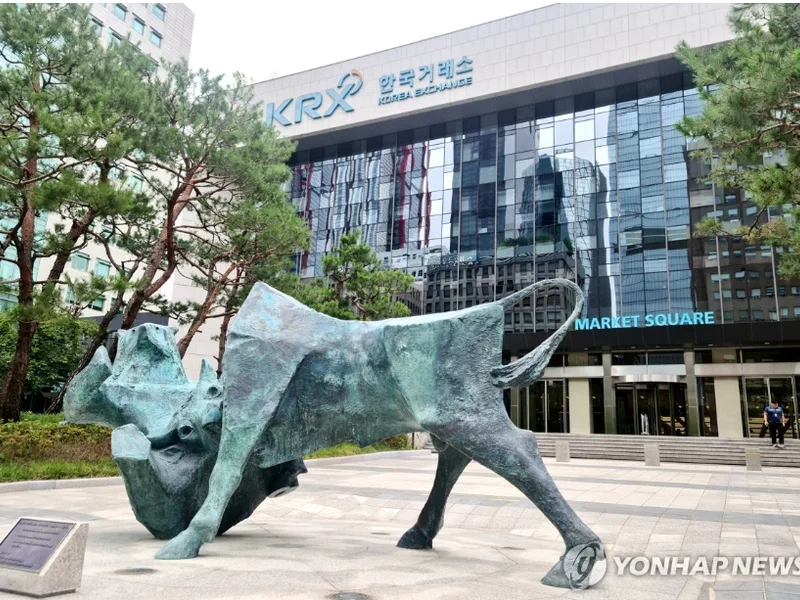
The Korea Exchange will unveil a list of 151 publicly traded companies with persistently low price-to-book ratios (PBR) starting from the 2nd. While 34 companies, having disclosed plans to enhance their corporate value, were excluded from the list, 15 long-term undervalued companies were included despite submitting improvement plans.
The list comprises 96 KOSPI and 55 KOSDAQ companies. The average PBR is 0.247x, indicating that the market values their book value of KRW 10,000 at approximately KRW 2,470. This is a significant disparity compared to the overall KOSPI PBR of 1.43x and KOSDAQ PBR of 1.60x as of last month's 30th.
The list features numerous major conglomerate affiliates. The PBRs of E-Mart and Lotte Hi-Mart were 0.15x and 0.17x, respectively. Lotte Chemical (0.18x), Hyundai Steel (0.19x), and Hana Life Insurance (0.27x) were also included.
Industry Breakdown and PBR Ranking
In the KOSPI market, the materials (23) and industrials (22) sectors had the highest number of companies with low PBRs, followed by discretionary consumer goods (18) and staples (12). On the KOSDAQ, the information technology (17), industrials, and healthcare (both 10) sectors were home to the most low PBR companies.
Three-Year Industry PBR Ranking: Long-Term Undervaluation Exemption
To filter out temporary price drops, the Korea Exchange used the PBR over the past three years as a benchmark. Based on the Global Industry Classification Standard (GICS), they identified companies in the bottom 25% of the KOSPI and the bottom 10% of the KOSDAQ for six consecutive or six out of seven half-year periods across the 11 industry sectors.
The PBR calculation used the 20-day average market capitalization from September 21 to October 22 and the most recent total capital from the balance sheet. This method aims to reduce the impact of daily price fluctuations on the selection results.
Out of the 2,431 companies reviewed, excluding those with delisting reasons, 185 met the initial criteria. Among them, 34 companies that disclosed improvement plans to enhance their corporate value, including measures to improve their PBR, received a one-year exemption from public announcement.
Late-session Selling Pressure Persists as Low PBR Companies Face Scrutiny
Despite the recent efforts to identify and address underperforming companies, a notable number of firms have been excluded from the exemption list. These 15 companies, which submitted improvement plans but remained on the roster, are now facing increased scrutiny. The list includes 10 KOSPI and 5 KOSDAQ companies, indicating a prolonged period of undervaluation that cannot be concealed through simple disclosures.
Evaluating the Low PBR Scheme
The Low PBR list serves as a valuable tool, providing investors with insights into corporate valuation and encouraging companies to enhance their performance. However, it is essential to note that a low PBR does not always indicate significant upside potential for stock prices. Companies with low asset-to-profit ratios or diminished growth prospects may also exhibit lower PBRs, highlighting the need to assess return on equity (ROE) and profitability trends concurrently.
Commercialization and Accessibility
The public roster will be accessible on the Korea Exchange's Listing Disclosure System (KIND) Valuation-Up page. Additionally, the 'Low PBR' indicator will be sequentially implemented on securities firms' home trading systems (HTS) and mobile trading systems (MTS), ensuring widespread visibility and ease of access for investors.
Bloomberg | Financial Regulation Update
South Korea Tightens Screws on Corporate Governance
The Korea Exchange plans to provide one-on-one customized consulting to 151 publicly listed companies this year, stepping up efforts to enhance corporate governance. Meanwhile, the Financial Services Commission will revise its stewardship code guidelines to encourage institutional investors to engage more actively as shareholders.
The list of targeted companies is updated annually on the first trading day of May and November, with the latest list valid until May 3, 2027.